
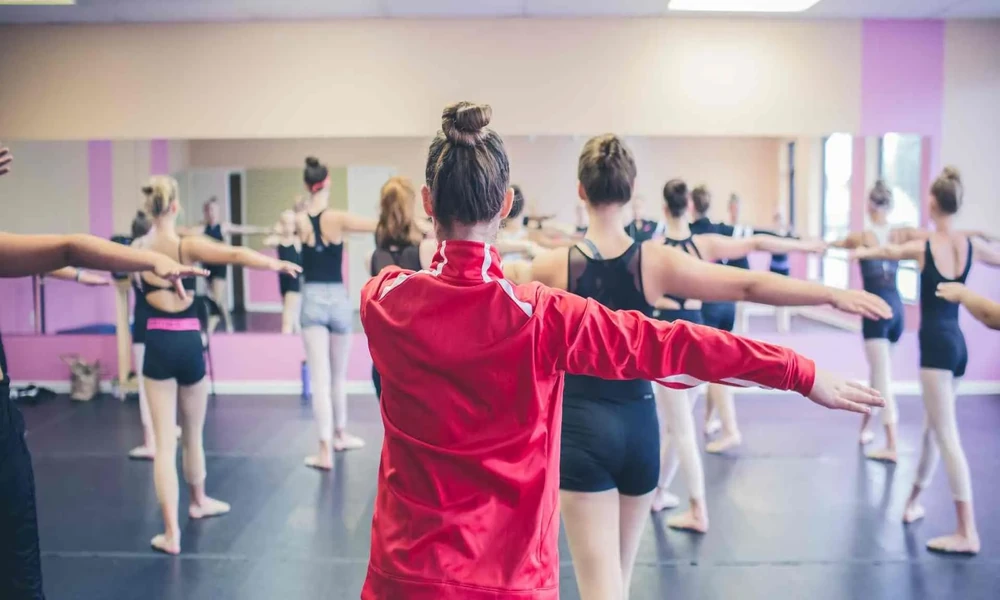
Ballet is so much more than a child’s after school activity. It can offer appropriate and meaningful musical awareness while introducing movement with structure and discipline at a developmental time. According to the Royal Academy of Dance, dance can help to build confidence, coordination, creativity and social skills in children. It also has some of its early programs aimed at helping children to develop towards more structured ballet training.
Knowing the ballet terms before or early on in ballet training can, then, assist parents in creating a supportive environment for their child.
To learn the ballet vocabulary
Ballet has a unique vocabulary which is used by the teacher to convey the movements precisely. Parents don’t have to be dance experts, although being familiar with the terms of ballet will make talking to children and teachers much easier. The words plié tendu relevé and arabesque etc. refer to a certain way rather than just being ‘traditional’ words. NorthPointe Dance Academy shares that knowing this vocabulary can support parents in understanding their child’s progress be more involved in their child’s dance learning and development. The preparation of the body involves using technique.
The use of technique is a preparation of the Body
The strong ballet base progresses incrementally to balance the postures, increase coordination strength and enhance body-awareness. Dance is defined by the National Endowment for the Arts as an activity that promotes flexibility, exercise of muscle development needs, alignment of the body, balance and coordination and testing children’s spatial relationships and sequencing.
Posture Co-ordination Musicality and Physical Development are also emphasized in the Royal Academy of Dance’s children’s work.
Therefore, preparing for ballet early should concentrate on movements suited to the age and not movements considered to be difficult.
Details to support developing Discipline and Learning Skills
Ballet also helps the children to learn ballet steps, listen, observe, remember and respond to direction. Technical learning is important through repetition, for children can become familiar with the movements and make them controlled. According to the Royal Academy of Dance, confidence coordination expression life skills development within dance education and dance examinations are life skills that may be developed through dance.
Additionally, the National Endowment for the Arts has pointed out that “Arts education creativity collaboration and critical thinking is related.
These experiences can help children build for their learning in a more structured environment outside the dance studio.
Help Give Confidence, Don’t Put Pressure
Very important, parents make ballet a positive experience. Raising students’ hearts to effort and to build curiosity step-by-step and gradual is important, not for the students to move towards perfection. It would be beneficial for kids to know that it takes time for things to progress and that different dancer’s progress at different rates. Children can also become comfortable in presenting themselves in front of others through performance opportunities. Evidence and best practice evidence identified by Royal Academy of Dance link participation in dance with emotional wellbeing, confidence in expression and communication and social development.
Developing a Safe and Sustainable Ballet Journey
A child can acquire technique confidence, discipline and love of dance with informed parental support and appropriate teaching and make learning fun. This translates in a way to preparing for ballet development and the whole of their personal development.